 The Spectrum Keyboard is a redesigned music keyboard intended for digital synthesizers, samplers, and other electronic media applications. It is planned as a ‘musical typewriter’, making the playing of chords and scales much easier than the old black-and-white keyboard. This is the first version (1988) of the keyboard built in New York in 1991 called the Terpstra-keyboard.
Click on the link to see the article in your browser or right-click to save the file to your drive.
http://siementerpstra.com/writings/Terpstra-SpectrumKeyboard.pdf
 The GLOBAL KEYBOARDS refer to a complimentary pair of generalized musical typewriters for computer-based electronic media. Since the design was formulated in 1986 it has been given several names: the Spectrum Keyboards (after a discarded color scheme), the One-Circle Global Keyboards (after an essential parameter of the design), or just my generalized keyboards. The complimentary relation between the two keyboards has also led me to call them male and female.
 The author lays out the functions and main features of the neutral diatonic modes – a small set of useful symmetrical harmonies derived from the seven traditional diatonic modes.
 The author examines an interesting and neglected set of harmonies that make up the diminished scale. Along the way he demonstrates the usefulness of the Expansion Index as an organisational tool. In addition, he makes some introductory remarks concerning the comparative musical theory of tonal harmony.
 The author looks at a variety of substitutions for V7 and IVm6 within tonal harmony and why such procedures work. Meanwhile he explores some fundamental issues of music theory.
 The author examines a variety of chord progressions within tonal harmony. In order to better understand the syntax or ‘flow’ he defends a morphological toll called the Reciprocity Model of chord progression. With this aid he looks at some interesting features mainly oriented around the extended meantone fabric of harmony.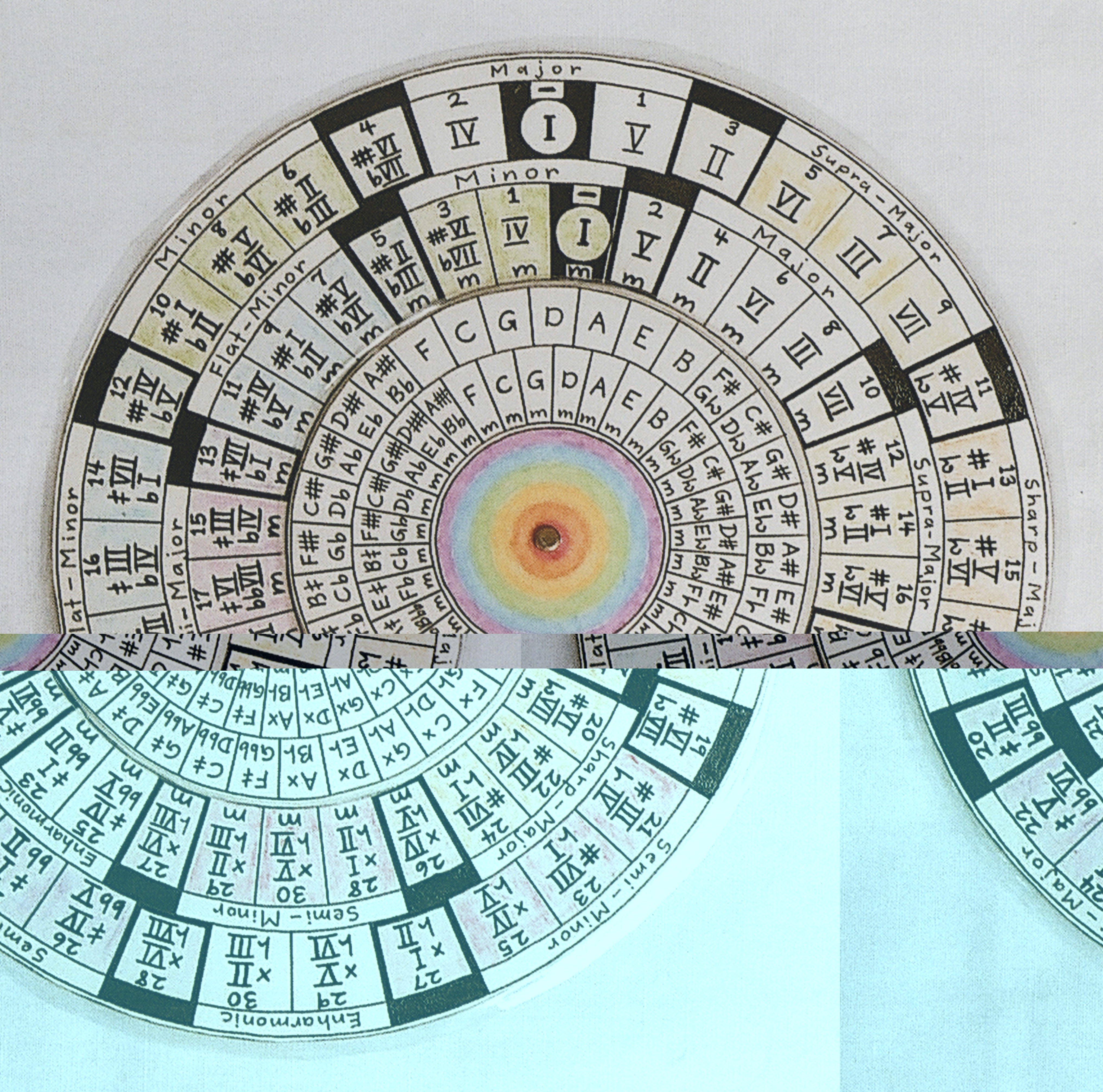
 The author introduces a device that enable the rapid analysis of harmonic functions and related chores. He explains how the idea developed over time in his pursuit of ergonomics, as well as some essential features of the device.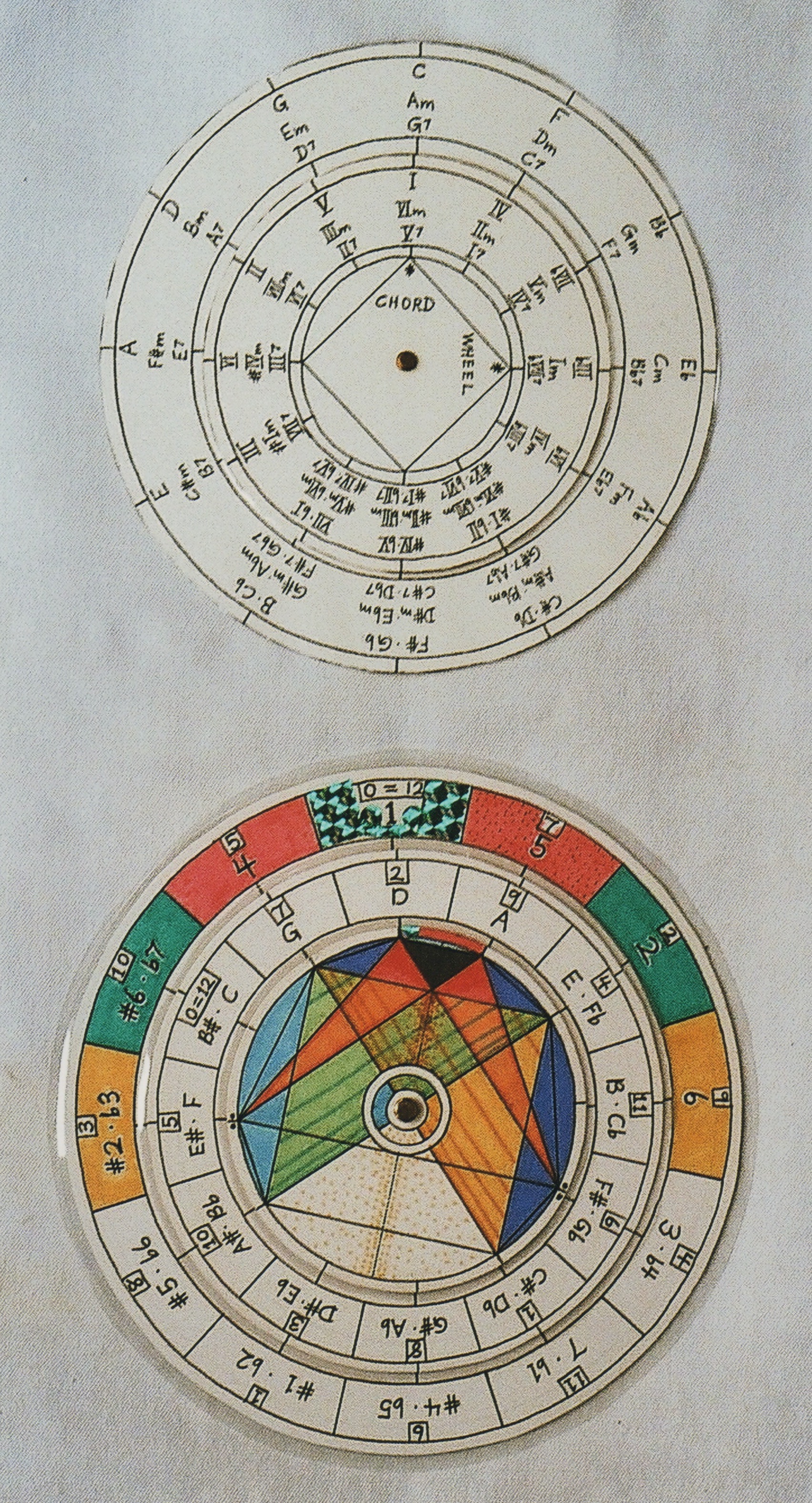
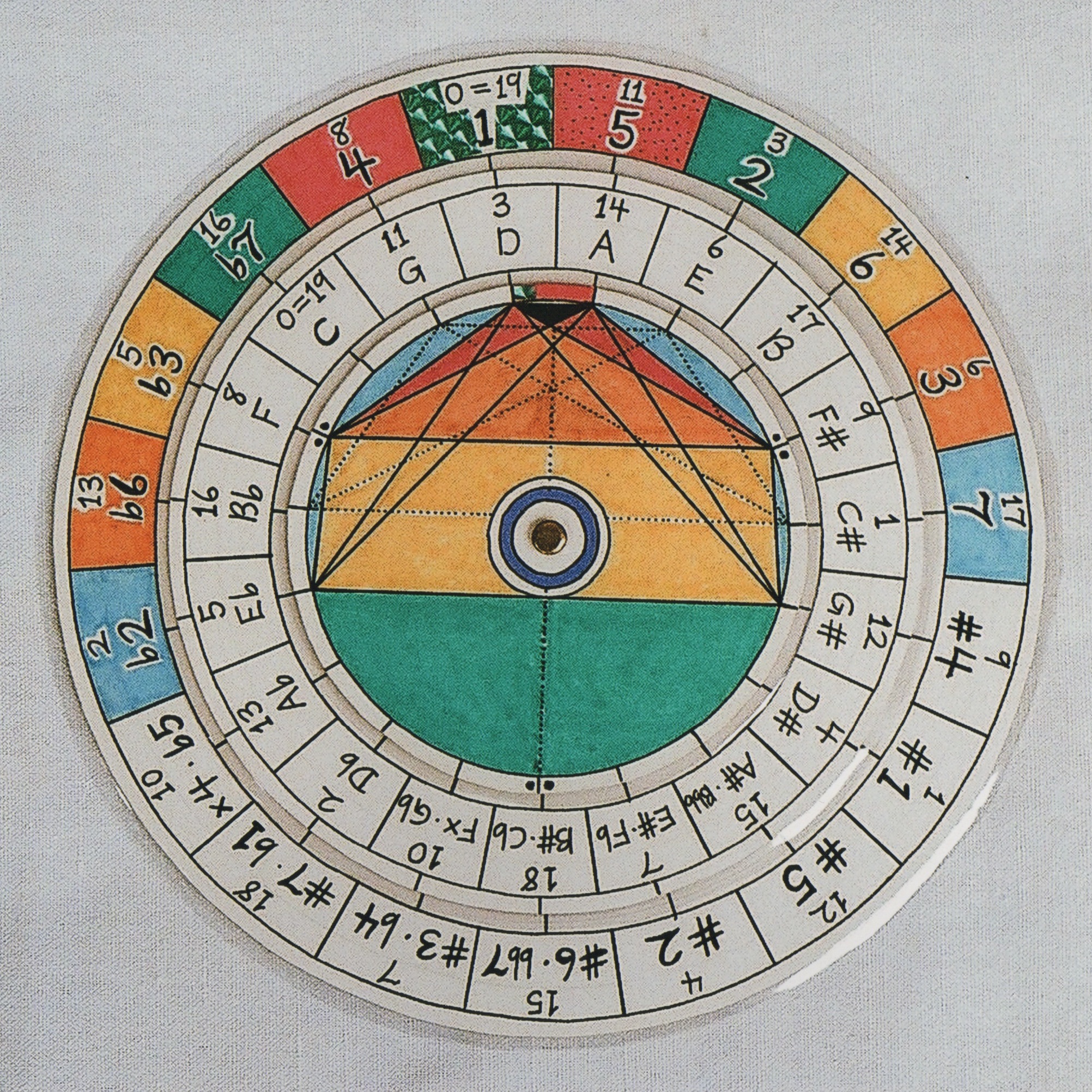
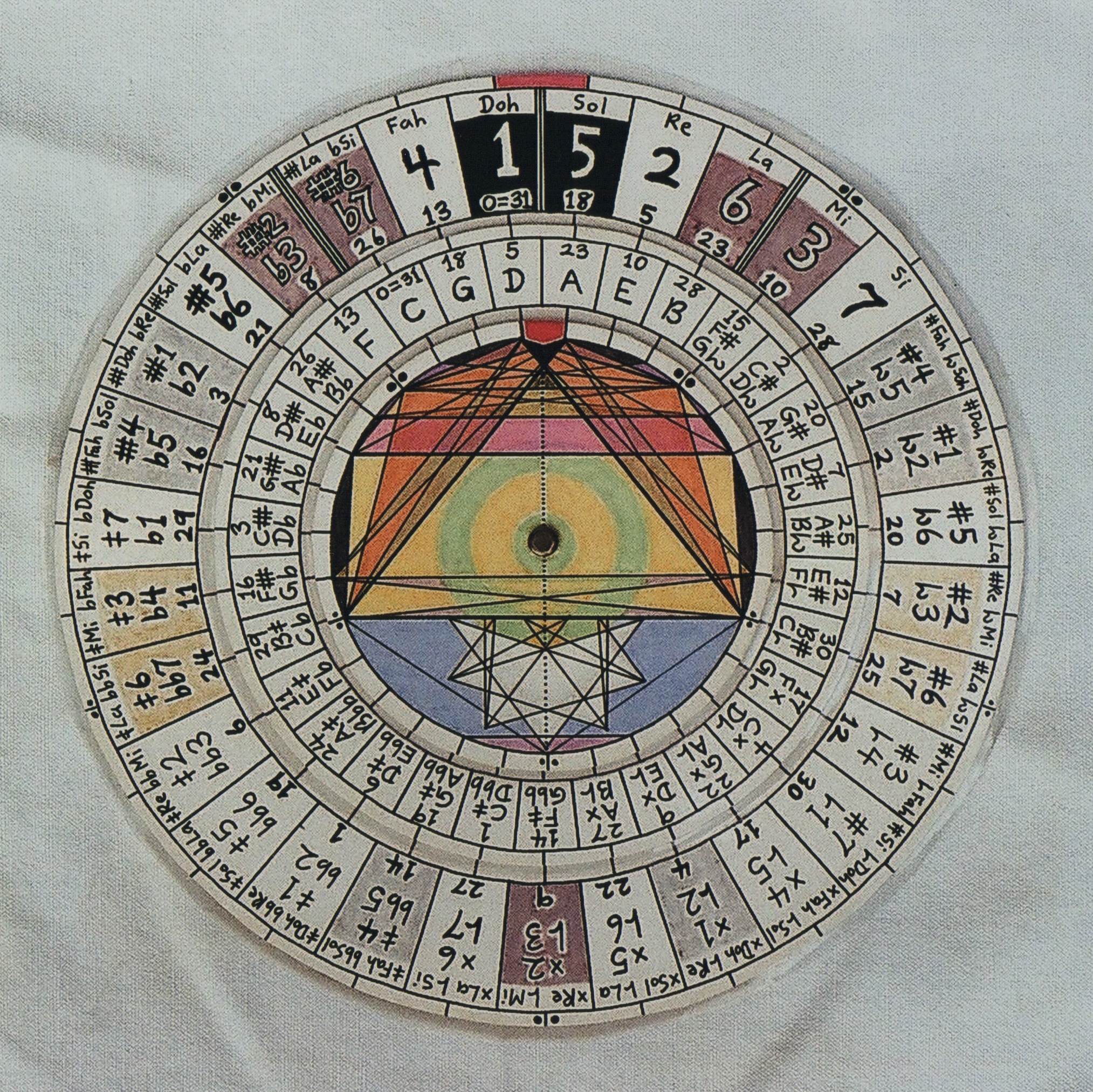
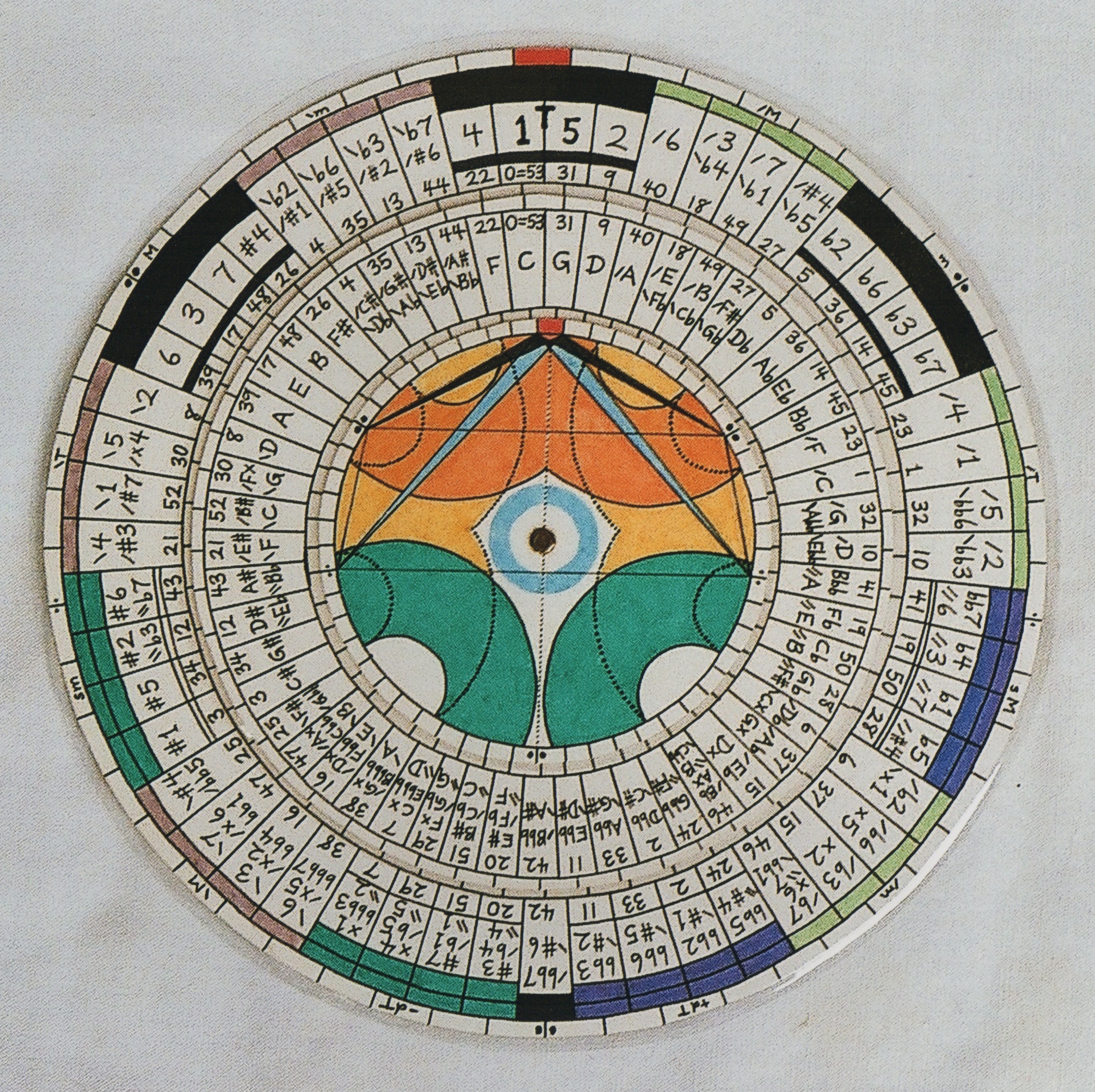
 Starting in the middle 1980’s, around the time that I wrote up A Short List of Musical-Cosmological Monochords, I began a patient compilation of diagrams. Most of them consisted of elaborate tables showing numerous just ratios calculated in cents, as well as some speculative monochords and representations of the Harmonic Series. I meant this work to accompany a text that sums up my investigations into Harmonics. Inevitably, it reflected my interests during the seventies and early eighties – just intonation, drone-based music, and monochords. I never got around to writing the text, though I left a couple of pages of notes. After a few years I scrapped the whole project and archived it under the rather imposing heading: The Laws of Harmonics. Recently I dragged it out of its storage to reconsider the project.